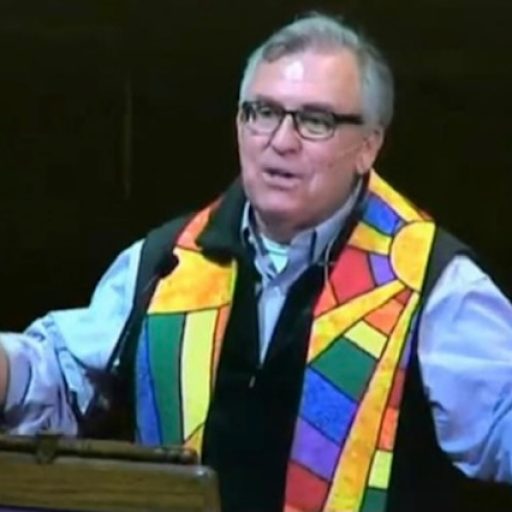
James Bell wrote earlier today —
I don’t think most of us realize how much the American church will change over the next ten years.
A recent report on Christianity in America estimates that 100,000 churches could close or be repurposed over the next decade. Right now, estimates are roughly 4,000 churches are already closing each year.
If the 100,000 estimate proves accurate, that would mean roughly:
10,000 churches a year.
192 churches a week.
27 churches a day.
More than one church every hour.
That is generational change.
And I don’t think this is only about declining attendance or empty buildings.
I talk with pastors all over the country. Different denominations. Different communities. Churches with thousands of people and churches with only a few dozen.
Pastors are tired. Churches are struggling to find their next pastor. Congregations are aging. Attendance is declining in many places. Budgets are getting tighter. Buildings are becoming harder to maintain.
And churches that have existed for fifty, seventy-five or a hundred years are trying to figure out whether they can keep going.
Barna reported in 2026 that 24% of senior Protestant pastors said they had seriously considered leaving full-time ministry during the previous year.
Spend enough time around pastors and it isn’t difficult to understand some of that exhaustion.
Many have spent years preaching every week, counseling marriages, sitting in hospital rooms, conducting funerals, navigating conflict, managing staff, raising money, recruiting volunteers, answering heavy criticism and carrying situations most people in the congregation will never know existed.
Now many are doing all of that while attendance is declining, membership is aging, budgets are shrinking and fewer people are available to lead.
But I wonder if what we are seeing is exposing something deeper.
A church was never supposed to be a group of Christians watching one professional Christian do the work of ministry.
Paul describes something very different in Ephesians 4. Christ gave leaders to the church “to equip the saints for the work of ministry, for building up the body of Christ.”
Pastors are supposed to minister.
But they are also supposed to prepare other Christians to minister.
We need older Christians discipling younger Christians.
We need mature believers who know how to sit with someone who is grieving, open the Bible with someone who is struggling, visit someone in the hospital and walk alongside a new believer.
We need churches developing elders before they desperately need them.
We need pastors training pastors.
And we need ordinary Christians who understand that the church does not simply exist to provide ministry for them.
They are part of the ministry.
If the next decade really does bring tens of thousands of church closures, I don’t think the answer can simply be finding enough pastors to keep all of our existing structures running.
We need to recover a vision of the church where pastors equip the saints, mature Christians develop younger Christians, leaders reproduce leaders, disciples make disciples and the whole body actually functions like a body.
Maybe the coming decade will force us to recover something we should never have forgotten:
Ministry does not belong only to pastors.
It belongs to the whole church.
— and someone else, I’m sorry but I can’t trace this back, wrote –—
CNN ran a piece this week on what they’re calling a “tsunami” of church closings. The projection is roughly 100,000 churches closed or repurposed over the next decade.
None of this is new to anyone who walks alongside congregations every week. Pastors, associational, and denominational leaders have been watching it come for twenty, thirty…sixty years. What’s new is who’s telling the story. When the people on screen sound like the people writing the content, I guess the conversation finally gets more airtime, just with a bent leaning in a particular direction (yes, I’m parsing my words).
Regardless, much of the framing is accurate, especially on systems and structure. Not so much on theology.
– A congregation of fewer than 100 people spending hundreds of thousands a year to insure and maintain a building they cannot fill. Check.
– Leaders within not calling for change soon enough, and members who don’t show even a semblance of openness to it until the window has closed. Check.
– The comfort of the familiar as a primary motivator for the people inside the walls, which fed their refusal to adapt their methods (the article doesn’t touch their message, but I have a pretty good idea). Check.
Most of us have been in those rooms where the building sets the agenda, and the budget serves the facility and personal preferences more than the mission. Good people guarding rhythms that may once have carried life and now mostly carry nostalgia.
Here’s my indigestion, and it holds even if the people gathering in that building have codified sound theology. The church isn’t a social services agency that happens to sing, and it isn’t a brand fighting to stay relevant.
The bride, the church, is the gathered people of the living God, adopted children, intentionally formed into everyday disciples and sent to make disciples in the places they live, work, worship, and play. Good parking, strong music, and warm hospitality help, but they are not the reason a congregation exists.
If more congregations accepted that reality, more of them would let go of the building. It’s crumbling now, but the commitment to the mission crumbled first. The building is just catching up. Some need to partner with a more vital congregation down the road. Some need to pour everything they have into a new work that can reach people they no longer can, because they’ve become a donut church: members drive in from somewhere else, and the neighborhood around the building, the very community the church exists to reach, sits untouched in the middle. With a right understanding, none of that is failure, and a few of those may be the most faithful decisions a remaining congregation ever makes.
And not surprisingly, the article misses the most important part: Jesus said He would build His church. Jesus shows up in the piece only in passing, a painting over an altar and a line about where believers gather. What’s missing is anything He actually said. I wonder whether those portions of the interviews were clipped, because, you know, He’s kind of polarizing when He says things like, “I am the way, and the truth, and the life. No one comes to the Father except through me.” (John 14:6)
But before you jump on and say Amen, let me ask you this: Do you believe that? Because if you did, faithfulness to His call would be at the forefront. His call is to make disciples… to love the Lord with all your heart, soul, mind, and strength, and to love your neighbor as yourself.
Our part is faithfulness to what is in front of us. If we aren’t willing to do that as individual members… then why is anyone surprised that so many churches are closing?
Are they really the church, or just a club with a cross on it where people who like each other gather around shared political views and lifestyle preferences?
In my opinion, I’m okay with those places closing. One, they would stop calling themselves the church, and two, the community around them would stop mistaking a club for the body of Christ.
Leave a Reply